SBIR Grant Writer vs. Consultant: How to Choose a Partner
Deciding between an SBIR grant writer and a strategy partner? Learn the differences, what to ask before hiring, and when to write the proposal yourself.
The short answer: Do you need an SBIR grant writer or a strategy partner?
Founders often realize they need help with federal funding when they open the SF424 Application Guide for the first time. The immediate instinct is to look for an SBIR grant writer to translate their science into a compliant proposal.
An SBIR grant writer focuses on execution. They take your existing research plan, format it to meet agency guidelines, edit the text for clarity, and ensure all mandatory forms are complete. A funding strategy partner focuses on the entire lifecycle. They evaluate your pipeline, select the right funding mechanism, structure your budget to maximize allowable costs, and align the proposal with your broader venture capital roadmap.
If your internal team has a firm grasp on agency priorities, budget rules, and commercialization strategy, a writer can save you time. If you are building your federal funding strategy from scratch, a partner provides the structural foundation required for a competitive application.
What an SBIR grant writer brings to the table
A dedicated SBIR grant writer is primarily an editor and project manager. Their job is to ensure your application survives the administrative screening process and reads clearly to reviewers.
Federal applications require strict adherence to formatting rules, page limits, and specific document structures. A writer manages these details. They will take your Specific Aims page, research strategy, and biographical sketches, then refine the language. They ensure that the narrative flows logically and that the technical jargon is accessible to reviewers who may be experts in adjacent fields rather than your exact sub-discipline.
A writer will also track the required attachments. An NIH SBIR application involves dozens of individual PDF uploads, from facilities descriptions to equipment lists. Missing one can result in the application being withdrawn before it ever reaches a review panel.
Before hiring an SBIR grant writer, it helps to know where your project stands. You can check your baseline with our Grant Readiness Assessment. It asks ten questions to help you determine if you have the preliminary data and team structure in place to start drafting.
How a strategy partner differs from a standard writer
At NEXA Bio Partners, we operate as a strategy partner. We provide strategy, proposals, and agency execution end-to-end. We combine grant expertise with a venture and family office network, operating on a "one partner, both tracks" model.
A strategy partner gets involved long before the writing begins. The work starts with mechanism selection and agency alignment. For example, deciding whether to pursue a standard Phase I, a Fast-Track, or a Direct-to-Phase II requires analyzing your preliminary data and commercialization timeline. You can read more about these distinctions in our guide to Phase I vs Phase II.
Budget strategy is another major differentiator. An SBIR grant writer typically plugs your estimated costs into the required forms. A strategy partner actively structures the budget to support your company's growth.
NIH SBIR award ceilings without a waiver are currently $323,090 for Phase I and $2,153,927 for Phase II (NOT-OD-26-075). Within those limits, a partner helps you calculate indirect costs (which can be up to 40% of total direct costs) and the fixed fee (up to 7%). The 7% fee is the only true discretionary profit a company can make on an SBIR award, and structuring it correctly is vital for early-stage startups. A partner will also ensure you request Technical and Business Assistance (TABA) funds, which provide up to $6,500 in Phase I and $50,000 in Phase II for commercialization services.
When to skip the SBIR grant writer and do it yourself
Not every company needs outside help for every submission. You should consider writing the application internally if your team meets specific criteria.
First, you need a Principal Investigator (PI) with a track record of securing federal funding. If your PI has successfully managed NIH or DoD awards in the past, they likely understand the unwritten expectations of peer review. Second, you need dedicated internal bandwidth. A competitive Phase II application needs real time from your own scientists, not only from the writer.
However, you cannot simply submit endless applications until one succeeds. NIH enforces strict limits on how many times a company and a PI can apply.
Small businesses are limited to a total of 9 new and resubmission Phase I, Fast-Track, and Direct-to-Phase II applications (and contract proposals) per federal fiscal year across all HHS agencies (NOT-OD-26-090). Furthermore, individual PIs are limited to 6 applications per calendar year across most activity codes, and multi-PI applications count toward the limit for each PI involved (NOT-OD-25-132).
Because your shots on goal are capped, every submission must be highly competitive. If your internal team lacks the time to produce a top-tier application, doing it yourself can waste one of your limited submission slots.
Before committing internal resources, run the SBIR Eligibility Checker. It asks five questions on ownership, company size, PI employment rules, and the US place of performance requirement.
Questions to ask an SBIR grant writer or consultant
If you decide to seek external support, the vetting process is critical. The federal funding space includes independent freelancers, university-affiliated advisors, and full-service firms. Asking the right questions ensures you understand exactly what you are buying.
How do you handle mechanism and agency selection?
A pure writer expects you to tell them which Program Announcement to target. A strategy partner will analyze your science and recommend the best fit. NIH assigns applications to specific institutes based on the science, but applicants must make a strong case for relevance. You can explore potential fits using our SBIR Topic Area Fit tool.
What is your experience with foreign components?
Many biotech and medtech startups rely on non-US contract research organizations (CROs) or contract development and manufacturing organizations (CDMOs). The rules governing foreign involvement are strict and recently updated.
NIH applies additional review considerations to foreign organizations, assessing whether the project offers special opportunities not readily available in the US. More importantly, NIH banned foreign subawards entirely as of May 1, 2025 (NOT-OD-25-104). Foreign Facilities and Administrative (F&A) costs are strictly capped at 8% of modified total direct costs. If your pipeline involves international partners, your consultant must know how to navigate these restrictions. You can screen your partners using our Foreign Risk Check.
How do you structure your fees?
Consultants and writers use various fee models, including flat rates, hourly billing, and hybrid structures. Be cautious of any arrangement that relies heavily on contingency fees paid from the grant award itself. Federal rules generally prohibit using grant funds to pay for the cost of preparing the proposal. A transparent partner will explain exactly how their fees are structured and when they are due.
Do you support the commercialization plan?
For Phase II and Fast-Track applications, the commercialization plan is heavily scrutinized by reviewers. A writer will format the market data you provide. A strategy partner will help you articulate your regulatory pathway, reimbursement strategy, and follow-on funding milestones. NEXA brings 70+ years combined experience to this work, and ~40% of clients received additional investments from VC & Family Office Network.
Comparing your options
| Feature | Internal Team (DIY) | SBIR Grant Writer | Strategy Partner |
|---|---|---|---|
| Primary Focus | Science and daily operations | Formatting, editing, compliance | End-to-end strategy and execution |
| Agency Alignment | Self-guided | Relies on client direction | Actively matches science to agency priorities |
| Budget Strategy | Self-guided | Inputs client numbers into forms | Optimizes indirects, fee, and TABA |
| Commercialization | Self-guided | Edits client-provided market data | Structures regulatory and venture milestones |
| Time Commitment | 100+ hours of internal staff time | Moderate internal time for scientific input | Minimal internal time, focused on review |
Frequently asked questions
Does hiring an SBIR grant writer make an award certain?
No. No consultant, writer, or firm can promise federal funding. The peer review process is rigorous and independent. A strong partner improves your application by ensuring it aligns with agency priorities, complies with all rules, and presents a compelling scientific and commercial case. The final decision always rests with the agency.
When are the next NIH SBIR/STTR deadlines?
The standard due dates for NIH SBIR and STTR applications are January 5, April 5, and September 5. When a due date falls on a weekend or federal holiday, it rolls to the next business day. For example, the upcoming 2027 dates are January 5, 2027 (Tuesday), April 5, 2027 (Monday), and September 7, 2027 (Tuesday, because September 5 is a Sunday and September 6 is Labor Day).
How long does the review process take?
The timeline from submission to funding requires patience. Your review assignment will appear in eRA Commons about two weeks after the due date. For a January 5, 2027 submission, the scientific review panel meets in March 2027, the advisory council meets in May 2027, and the earliest possible award start date is July 2027.
Is the SBIR program currently active?
Yes. The SBIR and STTR programs were reauthorized in 2026 for five years, extending their authority through the end of federal fiscal year 2031 (September 30, 2031). NIH has reissued its parent announcements with updated rules and budget guidelines.
How do I find open opportunities beyond NIH?
While NIH is the largest funder of biomedical research, agencies like the DoD (through CDMRP), ARPA-H, and BARDA also offer substantial non-dilutive funding. You can paste your company domain into our Grant Radar to see matching active programs across multiple federal agencies and foundations.
The next step
Deciding how to resource your federal funding strategy dictates the quality of your submissions. With strict limits on how many applications you can file each year, every proposal needs to be structurally sound, scientifically compelling, and commercially viable.
Whether you need a targeted review of your aims or end-to-end execution, we can help you evaluate your options. Send us your aims page and we will tell you in 30 minutes whether your project aligns with current agency priorities and how to structure your next submission. Book your 30-minute funding assessment.
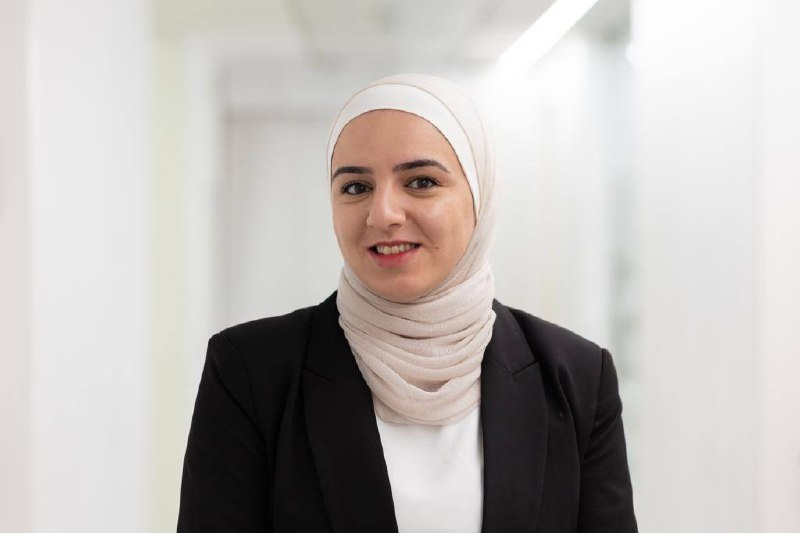
Dr. Jinan Elayyan is a PhD-trained scientist and Strategy Engagement Manager with expertise in supporting biomedical organizations across the non-dilutive funding landscape. She earned her PhD in Biomedical Sciences from the Hebrew University of Jerusalem, with academic training in epigenetics and a strong record of preclinical research published in high-impact journals. Her research excellence was recognized with an Excellence in Research award upon graduation.
Building on her scientific foundation, Dr. Elayyan has developed a strong record in non-dilutive funding strategy and program leadership. She works closely with executive teams and scientific leadership to shape funding strategies that align organizational priorities with scientific readiness and external funding expectations, contributing to the successful award of multiple competitive funding programs.
In her role, Dr. Elayyan provides strategic oversight across funding initiatives, guiding prioritization, maintaining continuity across planning and review stages, and supporting informed decision-making as programs evolve. Her approach emphasizes clarity, momentum, and long-term strategic impact.
LinkedIn